Texas Signage Laws: Maximizing Visibility Within Local Ordinances

You’ve heard the saying, “Everything is bigger in Texas.” But when it comes to commercial signage, the biggest thing you’ll face isn’t the pylon sign itself—it’s the regulatory burden.
Table of Contents
ToggleI’m Burak Akıncı. Today, let’s talk about why a signage project in Texas isn’t just a construction job; it’s a legal navigation through a multi-layered code environment. You might be able to erect a massive pole sign on a Houston freeway, but try that same strategy in Austin, and your project will be dead on arrival.
I’ve condensed the complex legal landscape into a practical guide to help you maximize visibility while avoiding million-dollar fines or uninsurable assets.
The Golden Rule: State First, City Second
Before worrying about a city council’s aesthetic preferences, you must satisfy the State of Texas. These rules aren’t just about looking good; they are about safety and federal funding.
Why does TxDOT care about my business sign?
Because signs along highways fall under the Highway Beautification Act. If TxDOT loses “effective control” over these signs, the state risks losing billions in federal highway funding. If you are near a right-of-way, TxDOT enforcement is zero-tolerance.
Can I handle the wiring myself to save money?
Absolutely not. In Texas, “electrical sign work” requires a specialized Master Sign Electrician license (managed by the TDLR). If an unlicensed person touches that sign, you face fire risks and immediate project shutdown.
I’m building on the coast. What’s the biggest risk?
Windstorms. If you are in a coastal county (like Galveston) and fail to get a WPI-8 Certificate of Compliance during construction, the Texas Windstorm Insurance Association (TWIA) will not insure you. If a hurricane hits, you are on your own.
The "Big Four": Four Cities, Four Different Worlds
Texas operates under a “Home Rule” system, meaning there is no unified state sign code. Every major city has a distinct personality and strict regulations.
Houston: The Rulebook
Houston lacks traditional zoning, so it compensates with a highly prescriptive Sign Code.- The “5 Sign” Limit: Generally, a business is limited to five on-premise signs total per property. Use this “budget” wisely.
- Street Classification: Your allowable height depends on the road. On a local street, you might be capped at 8 feet, but on a freeway frontage road (Category C), you can go up to 42.5 feet.
- Warning: Houston wages war on “Bandit Signs” (temporary stakes/posters). Fines can hit $500 per day.
Austin: Aesthetics & Environment
Austin’s philosophy is clear: Don’t block the view, and don’t pollute the night sky.- Scenic Roadways: If you are on a designated Scenic Roadway (e.g., Loop 360), your sign is capped at 12 feet. Forget the towering freeway signs here.
- Dark Sky Compliance: To reduce light pollution, many areas restrict LED lighting to 3000 Kelvin (warm white). Standard “cool white” or daylight LEDs are often prohibited.
Dallas: District Identity
Dallas uses a system of districts, and the rules change depending on where you stand.- Special Provision Sign Districts (SPSD): In areas like Downtown or the Arts District, a standard permit isn’t enough. You often need approval from a design advisory committee, which adds 2-3 months to your timeline.
- The 8-Word Rule: In the Downtown district, attached signs are often limited to a maximum of 8 words (of 4 inches or taller). Keep your branding concise.
San Antonio: History & Heritage
Here, preservation is king. The Alamo and the Missions dictate the rules.- Materiality Matters: In Historic Districts or along the Riverwalk, plastic cabinet signs are effectively banned. You must use high-quality materials like wood, metal, or paint.
- Billboard Reduction: You cannot build a new off-premise billboard. If you want a digital billboard, you typically have to remove two existing static faces to build one digital face (the “2-for-1” rule).
City Comparison Cheat Sheet
| City | Primary Focus | Biggest Obstacle | Pro Tip |
|---|---|---|---|
| Houston | Traffic Safety | 5-Sign Limit | Never use “bandit signs” without a permit. |
| Austin | Environment/Views | 12ft Height Cap | Stick to 3000K LEDs (Dark Sky). |
| Dallas | District Identity | 8-Word Limit (Downtown) | Allow extra time for committee review in SPSDs. |
| San Antonio | Historic Preservation | Material Restrictions | No plastic signs on the Riverwalk. |
Strategic Tactics for Maximum Visibility
Here is how you can maximize your presence without getting your permit rejected:
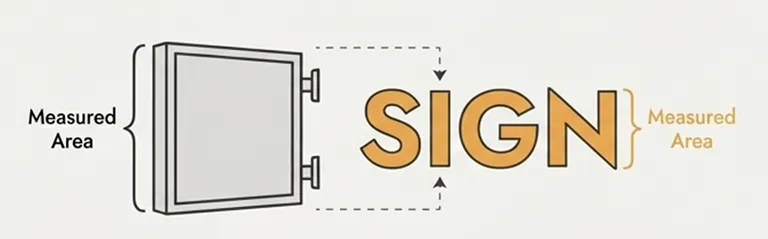
- The “Channel Letter” Loophole: In many cities, if you install a cabinet sign (a box), they measure the area of the entire box. If you use channel letters (individual letters mounted to the wall), they often only measure the area of the text itself. This allows you to legally display much larger text.
- The Grandfathering Trap: Do you have an old, non-conforming pole sign? Do not tear it down to “upgrade” it. If you alter the structure or exceed a repair cost threshold (often 60% of value), you lose your “grandfathered” status and must bring the sign into current compliance—usually meaning you have to shrink it significantly.
- The Name Game: A common rejection trigger in Houston is a mismatch between the business name on the Certificate of Occupancy (CO) and the name on the sign permit application. Ensure they match exactly.
Conclusion: It’s Chess, Not Checkers
In Texas, signage is a strategic intersection of engineering, law, and design. You have to play by the rules of the road in Houston, the landscape in Austin, the district in Dallas, and history in San Antonio.
For your next project, don’t just ask, “Does it look good?” Ask, “Is it insurable and compliant?” Because in Texas, the only thing better than high visibility is legal visibility.
FAQ About Texas Signage Permits
My HOA bans a sign that the City permits. Who wins?
Can I put up temporary "bandit signs" on weekends?
Can I rebuild an old, non-compliant pole sign?
How long does the permitting process actually take?
Why was my permit rejected over the business name?
Let's Do It The Right Way
Texas bureaucracy is a labyrinth, but you don’t have to navigate it alone.
At SignsAtelier, we don’t just build beautiful signs; we handle the engineering, the permit drawings, and the “Public Way” applications. We have a network of certified installers across the USA to ensure you are compliant.
Don’t risk your budget on a fine.
Ready to start? Fill out the form below for a Free Compliance Check. I will personally review your location’s zoning rules and tell you exactly what you can (and can’t) do.
Get a Free Compliance Check & Quote Fill out the form below. Tell us your address and what you envision, and I’ll personally take a look at your zoning regulations.
Regional Permit & Zoning Guides
Navigating local ordinances can be complex. Explore our state-specific guides to ensure your signage meets all legal requirements across key markets.